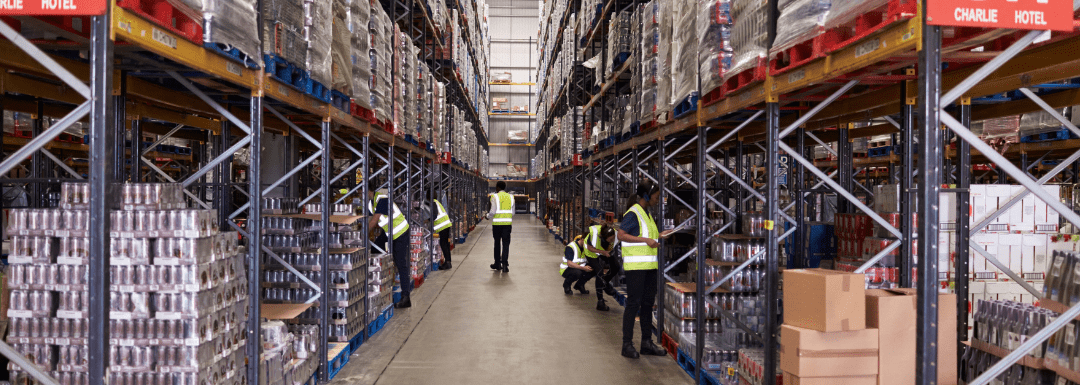
Implementing a Warehouse Management System in the Warehouse and Distribution Industry
The warehouse and distribution industry is the cornerstone of modern commerce, supporting supply chains that keep businesses running and customers satisfied.

The warehouse and distribution industry is the cornerstone of modern commerce, supporting supply chains that keep businesses running and customers satisfied.
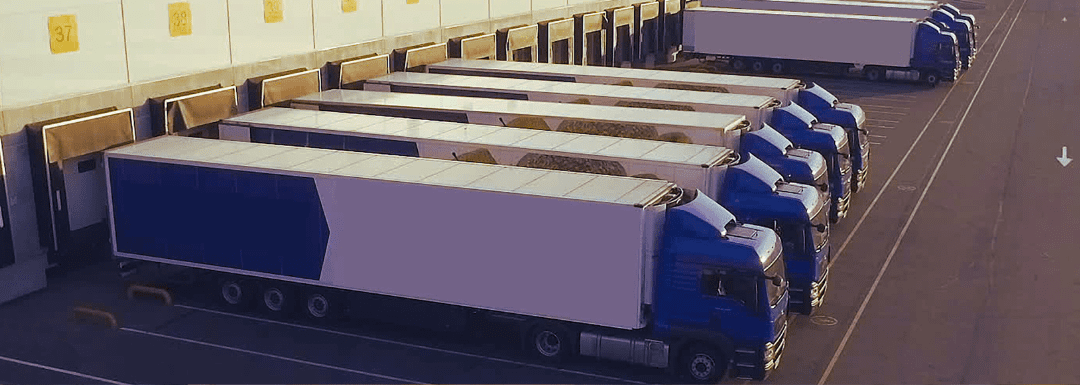
The third-party logistics (3PL) industry operates in a high-pressure, fast-paced environment. With demands for accuracy, scalability, and efficiency growing by the day, implementing a robust WMS has become a game-changer for providers.

In our previous blog, we focused on optimising inbound processes to create a solid foundation for warehouse operations. Now, let’s move to the next critical step in the supply chain: picking and outbound processes.

In our previous blog, we explored inbound processes within a Warehouse Management System (WMS), covering essential tasks like receiving, quality checks, and put-away. Now, let’s take a deeper dive into how to optimise these processes.

The automotive industry faces many unique challenges in managing its supply chain. From handling thousands of diverse components to meeting the demands of just-in-time (JIT) and just-in-sequence (JIS) manufacturing, every step requires precision and efficiency.

For many growing businesses, managing inventory through spreadsheets can quickly become overwhelming. While spreadsheets are flexible and familiar, they lack the sophistication needed to handle the complexities of larger inventory management demands.
Recent Comments