

For many growing businesses, implementing a Warehouse Management System (WMS) is the next logical step toward improving inventory accuracy, increasing operational efficiency, and scaling warehouse operations. However, there’s a common misconception that you need an experienced warehouse project manager to successfully deploy a WMS.
The reality is that modern warehouse management software is designed to simplify operations, standardise processes, and provide visibility that many businesses have never had before. With the right approach and technology partner (give THINK a call today), companies can successfully implement a WMS without adding another management layer.
In this guide, we’ll explore how businesses can deploy a WMS confidently, even without a dedicated warehouse project manager.
Why Businesses Think They Need a Warehouse Project Manager First
Traditionally, warehouse project managers have been responsible for:
- Designing warehouse workflows
- Managing inventory processes
- Training warehouse staff
- Monitoring performance metrics
- Coordinating technology implementations
As warehouse operations become more complex, it’s understandable why many business owners assume a warehouse project manager is required before introducing a WMS. However, today’s cloud-based warehouse management systems, such as the one from THINK, include built-in best practices, workflow automation, reporting tools, and implementation support that significantly reduce the need for specialist management expertise.
Step 1: Start With Clear Operational Goals
Define what you’re trying to improve. Having clear goals helps guide the implementation process and ensures your WMS configuration aligns with business priorities. Common objectives include:
- Reducing inventory discrepancies
- Improving picking accuracy
- Increasing order fulfilment speed
- Supporting business growth
- Reducing manual processes
Step 2: Choose a WMS Designed for Simplicity
Not all warehouse management systems are created equal. Some enterprise-level solutions require months of configuration, extensive consultancy, and dedicated warehouse management expertise. Others are specifically designed for small and mid-sized businesses looking for a faster path to operational improvement.
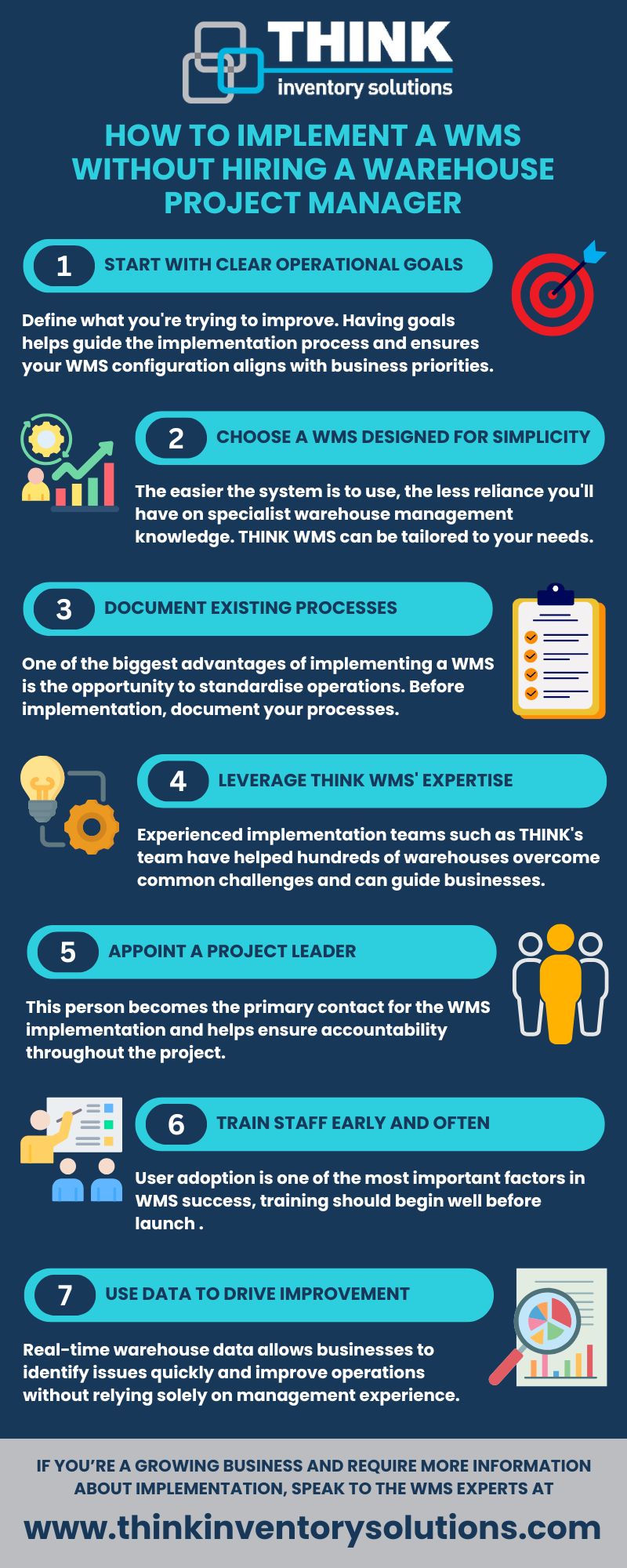
The easier the system is to use, the less reliance you’ll have on specialist warehouse management knowledge. The THINK WMS can be tailored to your needs.
- Intuitive user interfaces
- Guided onboarding processes
- Pre-configured workflows
- Cloud-based deployment
- Integration with ERP and eCommerce platforms
- Built-in reporting dashboards
- Comprehensive customer support
Step 3: Document Existing Warehouse Processes
One of the biggest advantages of implementing a WMS is the opportunity to standardise operations. Before implementation, document the following. Many businesses discover inefficiencies during this stage that can be addressed before the WMS goes live.
- Receiving Processes
- Putaway Procedures
- Picking and Packing
- Inventory Management
Step 4: Leverage THINK WMS’ Expertise
A good WMS supplier doesn’t simply provide software; they provide implementation expertise. Experienced implementation teams such as THINK’s team have helped hundreds of warehouses overcome common challenges and can guide businesses through:
- Warehouse layout optimisation
- Process mapping
- User training
- Data migration
- Go-live planning
Step 5: Appoint a Project Leader
While you may not need a warehouse project manager, you do need ownership. This person becomes the primary contact for the WMS implementation and helps ensure accountability throughout the project. In many businesses, this role is successfully filled by an operations manager, business owner, warehouse supervisor, or inventory controller. Choose someone who:
- Understands current warehouse operations
- Is comfortable learning new systems
- Can communicate with warehouse staff
- Is willing to champion process improvements
Step 6: Train Staff Early and Often
User adoption is one of the most important factors in WMS success, training should begin well before launch and focus on:
- Daily workflows
- Scanning procedures
- Inventory transactions
- Exception handling
- Performance expectations
Step 7: Use Data to Drive Continuous Improvement
One of the biggest advantages of implementing a WMS is access to real-time warehouse data. These insights allow businesses to identify issues quickly and improve operations without relying solely on management experience or intuition. Key warehouse KPIs include:
- Inventory accuracy
- Pick accuracy
- Order fulfilment rates
- Stock turnover
- Labour productivity
- Receiving efficiency
Contact THINK Inventory Solutions today and give our experts a call or contact us via our Quick Quote.
Recent Comments